The Royal Treatment

Polish your teapots, iron your doilies and butter your crumpets. For the first time in 70 years, an English monarch will be crowned and the whole world will tune in to see if King Charles III, Prince William and Prince Harry bust each other up at Westminster Abbey.

Whether or not the coronation turns into a fistfight, there will be plenty of spectacle, pomp, circumstance, tradition, snobbiness and a reminder that England adores fluffy hats.

King Charles will be 74 on the day of his coronation, code-named Operation Golden Orb (not even kidding). He’s much older than his mother was when she was enthroned. Queen Elizabeth was crowned at the age of 27 and reigned for 156 years.

The coronation is based on traditions going back centuries. In fact, for nearly 1,000 years, the Archbishop of Canterbury has conducted the ceremony. You’d think, at some point, people would start asking how he’s been alive for so long.

Our country has a bit of history with England, but we’re still infatuated with royalty. American royalty just isn’t the same. It’s either the Kardashians or the Kennedys, depending on who you ask. When we elect a new president, we don’t follow centuries of history and tradition. We do a swearing-in ceremony followed by four years of smack talk on social media.

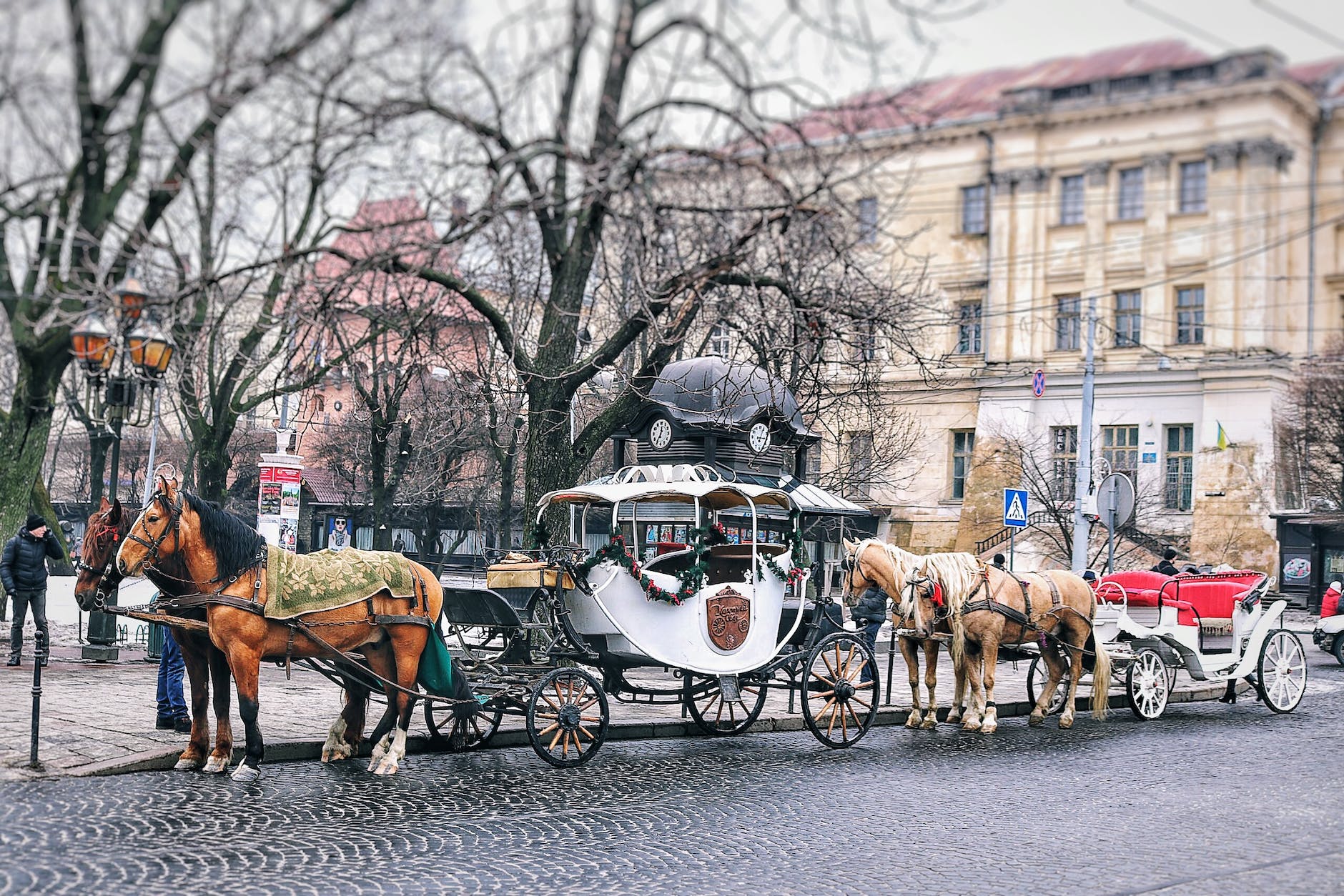
But England knows how to stage a coronation. King Charles and Queen Camilla will leave Buckingham Palace in a four-ton Gold State Coach that’s been used in coronations since 1830 and is notoriously uncomfortable. It’s covered in gilded statues and painted panels and will be pulled by eight dragons through the streets of London.

The procession travels from the palace, past Isengard at the southern end of the Misty Mountains, along Trafalgar Square, through Hogwarts to Westminster Abbey where the king will be anointed with holy oil using the Coronation Spoon. I don’t know if there’s a knife and fork. Wikipedia didn’t mention any other coronation utensils.

King Charles will then stand next to a really old chair (and it’s not even made out of swords pulled from the hands of his dead enemies), and given things to hold like the Royal Orb, a couple of scepters, gold spurs, a jeweled sword, gold bracelets and a ring. No wonder it’s hard to be king. That’s a lot to carry.

Then the Archbishop (who HAS to be a vampire, I mean come on!) places the five-pound crown on the king’s head. Saint Edwards Crown has a solid gold frame and is bedazzled with rubies, amethysts, sapphires and other jewels, making the crown worth more than my entire lifetime income.

Everyone yells, “God save the king!” and trumpets blare and, Bob’s your uncle, England has a new king.

Then the fun starts. Concerts will feature new musical pieces commissioned by the king himself, including an anthem written by Andrew Lloyd Webber, and I can only hope it’s performed by the cast of “Cats.” A refugee choir and an LGBTQ+ ensemble will perform, because we all know how much the royal family loves diversity.

There’s even a Coronation Quiche consisting of spinach, broad beans, cheese, tarragon and lard, to celebrate the country’s devotion to bland food. You can get the recipe online and make it for your family as you watch the celebration. 

Leaders from around the world will attend the coronation, except some countries who are afraid if they send leaders to the event, England will colonize them while they’re gone. But this is a historical moment you won’t want to miss, especially if the royal family starts throwing the crown jewels at each other.

Peri Kinder is a humor writer, life coach, yoga and meditation instructor, and award-winning freelance writer. She is the host of the Life & Laughter podcast.

Originally published in the City Journals.

Take Pride in Love

Although I don’t like crowds, parades or people, in general, when my husband suggested we attend the Pride Parade last month in Salt Lake, I painted a rainbow on my face, donned my “More Love” shirt and jumped in the car.

After a year of devastating anti-gay and anti-trans legislation across the country, we wanted to show our support for the LGBTQ+ community, even if that meant standing in a crowd of more than 50,000 parade attendees singing at the top of their lungs.

Because how do you fight hate? With a celebration of love.

The theme was “Queer Pride is Unapologetic” and that message rang throughout the parade. When the crowd saw the first rainbow banners a block away, it burst into applause and continued cheering for two hours. I sang out loud to every Lizzo anthem. I chanted until I lost my voice. I clapped until my shoulders hurt. I danced in ways that completely embarrassed my husband. I smiled until my face was sore.

Love was palpable. It brought me to tears more than once as I watched the support, kindness and joy being showered on this parade by thousands of people, of all ages, faiths, races and gender identities.

It was an event of unrestrained joy with enough sequins, bright colors, sky-high wigs, hella-high heels and drag queens to bring a smile to RuPaul’s face. Couples were holding hands, hugging, kissing, smiling, dancing and lifting a big middle finger to oppression and hate.

It was great to see nearly 200 businesses and organizations put on their rainbow best to spread the love. Entries included Delta Airlines, Westminster University, Intermountain Health, the Cougar Pride Center and ABC4 Utah.

The Salt Lake City Public Library had a large group of participants, because librarians are on the front lines, defending free speech every day and fighting book bans with humor and flair.

I’ve never been to a better parade. I’ve never celebrated a better message. With suicide rates rising for LGBTQ+ youth, hate is not acceptable. Intolerance is not acceptable. The only thing that’s acceptable is inclusion, joy, kindness, grace and love.

After the parade, we walked through the festival, talking with vendors, enjoying live music and eating tasty foods. We learned about drag queen bingo at a local church, chatted with a BYU student who wrote a book about coming out as gay and took pictures for lots of happy couples.

We watched people get tattoos, we bought new T-shirts, we smiled at strangers, we stood in line for lukewarm BBQ. We visited with friends. We saw bravery. We saw community. We saw free mom hugs. We saw compassion. We saw gay Darth Vader. We saw celebration. We saw dogs in tutus. We saw love.

Threats against the LGBTQ+ community have quadrupled over the last few years, and organizers spent extra money for heightened security at the parade and festival. State leaders, churches, communities and individuals should be careful about comments, rules and legislation that contribute to these dangers. Be careful who you exclude, it could be someone you love.

For the LGBTQ+ community, continue living unapologetic. The world needs more dancing, more sequins, more hella high heels, more bright colors, more sky-high wigs, more connection, more dogs in tutus, more rainbow T-shirts and more love.

It Takes a Village

Women who work outside the home are supernatural shapeshifters. One minute they’re closing the deal on a $5-million property and the next minute they’re on the phone with their 5-year-old daughter who’s upset because the parakeet won’t talk to her.

I think we can agree women are in the workplace. I think we can agree most households need two incomes to afford the basics like food, shelter and Netflix. I think we can also agree that mothers take on the biggest load when it comes to child care. Well, our country’s childcare system is failing women in a spectacular SpaceX explosion kind of way.

This disparity was highlighted during COVID, an infuriating pandemic where millions of women lost their jobs. As childcare centers closed, women were usually the ones to step away from their careers to become full-time school teachers, nurses, referees, short-order cooks, video game experts and day drinkers. 

Single mothers always draw the short straw when it comes to childcare choices. If you’ve never been a single mom who has to decide between using a vacation day or leaving her sick 11-year-old at home alone, consider yourself lucky. 

Care.com reported on childcare costs in the U.S., showing the average family spends 27% of their income on child care with the majority spending around $18,000 each year. Utah’s costs are a bit lower than the national average but we make up for that by having one bajillion children.

There are always people who say, “Women should be home raising their children. Problem solved.” Guess what? Problem not solved because most families need two incomes to get by, even adding in the cost of child care. When women choose to stay home, it takes a big bite out of the household income.

To combat this, parents work multiple jobs, alternate work schedules with a spouse or partner, rely on family members to babysit and hope their toddler becomes a child star to cover living expenses.

Employers, do you know how often moms worry about asking for time off to take kids to dentist appointments, doctor visits, parent-teacher conferences, lobotomies, etc.? It’s constant. There’ve been times when I was shamed by my boss because I needed to deal with a situation at home. That should never happen.

Women and families need childcare support and it’s about damn time to get creative.

Let’s start with free (or low-cost) onsite child care. Let’s throw in flexible and remote schedules that allow parents to be home after school. Let’s address the stupid 40-hour work week that’s not only a waste of time, but a drain on families. 

Kim Kardashian pays each of her nannies (she has at least four on call 24/7) nearly $100,000 per year. She got it right. That’s what women should be paid for watching children because it’s mentally, emotionally and physically exhausting. But the average family can’t afford ONE nanny for even half that price. 

And, yes, sometimes it’s the father who stays home with the kids (and they struggle, too) but the majority of childcare responsibility is placed on mothers. 

Mothers are expected to work competently at a full-time job and turn into Mary Poppins/Mrs. Doubtfire/Amelia Bedelia the minute they get home. We’re tired of shapeshifting. It’s making us cranky. 

If employers want to hire shapeshifters, they’d better be prepared to offer flexibility, creativity and full value for that skill or we’ll take our talents and go home. And then nobody wins. 

This column was originally published in the City Journals.

A lot on my plate

Fear sells, but why does the food industry use anxiety to sell products? I mean, if there’s one thing the seven billion people on this planet agree on, it’s that we need food. (And Baby Yoda is adorable. That’s universally accepted.)

Weeds or food?

When COVID hit last spring, I heard we’d run out of beef by autumn. My husband lost his mind. Someone told me canned vegetables would be as valuable as gold, which is good because I’d rather wear a can of peas on a chain around my neck than have to eat them.

Experts tell us food is plentiful and cheaper than ever before. Just the food leftover from Las Vegas buffets could feed several third-world countries for generations. They’d all develop diabetes and heart disease, but they’d have plenty of food.

And that’s the other fear; the idea that the food we eat, even broccoli and kale, has no nutritional value because the soil’s been depleted of nutrients and we’re consuming the dietary equivalent of Rice Krispies for each meal.

So, we hear companies proclaiming to have discovered new, perfect foods. Not just foods – Super Foods (with a heartbreaking origin story). They ask questions like, Do you poop every day at noon? Are you often irritable? Well, you’re eating the wrong food!

Social media is awash in these types of ads. “Buy our product made of 300 superfoods found only in caves along the Ganges River!” “Learn the secret of Cleopatra’s radiant skin, Helen of Troy’s weight loss supplement and Queen Elizabeth’s longevity.” (Spoiler alert: it’s never having to clean your own toilet.)

Companies tell us fans are “raving” about their green juice. False news. No one raves about green juice. The recipes have unknown ingredients like chlorella (a dried sea vegetable) and rhodiola, a cold-climate plant used by Vikings. Mmmmm. Yummy. (Sidenote: Vikings are dead. Did rhodiola kill them?)

Mushrooms are the new meat. The reishi mushroom is called the Queen of the Mushrooms because . . . um . . . it has a crown? I guess psilocybin mushrooms would be King of the Mushrooms, or at least the laid-back, hippie brother-in-law of the mushrooms.

Pretend meat is also the new meat. Impossible Meat might be better for the planet, but with its soy, wheat, and vegetable ingredients shaped and colored to look like chicken nuggets, it’s definitely not health food.

And don’t think it’s safe to drink water. No, sir! You can’t drink tap water, bottled water, well water, river water, toilet water or any other water unless it’s gone through an expensive, artesian reverse osmosis process. I used to drink water out of the hose in my front yard. I’m sure I’ll die full of mercury, lead, and chlorine.

Spinach and romaine lettuce routinely try to kill us, and don’t get me started on GMO conspiracy theories. I don’t have that kind of time. Are apples still good for us? Can we eat corn without worrying about growing a third arm? Does everything have to be organic, farm-fresh and certified because according to Facebook, we’re all doomed!

 I know Americans don’t have the best diets but throw me a grass-fed bone. We’re assaulted on all sides and just trying not to dive headfirst into a bucket of chicken for a morning snack.

Originally published in the Davis Journal

Making the grade

When my kids were little, I did a bit of substitute teaching. After I accidentally threw an encyclopedia and flipped a desk over, I realized teaching elementary school probably wasn’t for me.

Teachers are comprised of strong stuff. The molten lava that flows through their veins gives them courage and an unbreakable gaze. A skeleton made of graphene (200 times stronger than steel) keeps them steady and protects their hearts. And those hearts beat a consistent tempo that opens doors to new worlds and encourages students to find their own rhythm.

But teachers are exhausted.

I attended Viewmont Elementary during the 1900s, where teachers were the top of the food chain. I worshiped the good ones, feared the difficult ones, and loathed the mean ones.

I remember the “trip” our kindergarten class took to Hawaii where we ate coconut and learned the hula. And the teacher who caught us eating snowballs, so she melted snow to show us the dirt and grime. (I haven’t eaten a snowball in more than 45 years.) Or the teacher who shamed me for not knowing the word “chandelier.”

School was where I learned social skills. Okay, I learned them poorly, but I did learn some. I interacted with people my age where we talked about our favorite TV shows, what we had for dinner and whether my crush winked at me or had a tic.

Today, students feel lost.

My 8-year-old grandson started the school year online, changed to in-person learning, then went back online. He might enjoy hanging out with his mom, grandma, and little demon of a sister, but he misses his friends.

Imagine trying to learn long division on a Zoom call. I couldn’t even learn it in person. Or imagine hosting a virtual call for a class of first graders who have the attention span of a meatball. My mom thought education was vital, but if she had to supervise online learning for me and my four siblings, she would have sold us to the circus.

Teachers are struggling. Kids are struggling. Parents are struggling.

If we’ve learned one thing this crappy year, it’s that superheroes walk among us. Healthcare workers and winemakers are tied for the top spot on my list, with teachers, students, and parents finishing a close second by demonstrating unprecedented resilience.

Many kids are failing this year, but are they really? Can you fail when a global pandemic changes the rules? When teachers adapt daily to shifting conditions? Can you fail when parents work full-time jobs at home while staying on top of online assignments and hybrid schedules?

Teachers are a mighty mix of educator/guidance counselor/cheerleader/cruise director, and this year their creativity and patience has been tested. It brings to mind my husband’s favorite quote, “Looks like I picked the wrong [year] to stop sniffing glue.”

This is a thank you to the teachers who work with my grandchildren. The teachers who are innovative and kind. The teachers who show up like a boss and get to work. This is also a thank you to the students who have proven to be flexible and strong. They’re all doing the best they can as they watch adults try to figure everything out.

Maybe we write this school year off; maybe it’s not the year to learn geometry or teach Latin. Perhaps it’s the year we value kindness, connection, and self-care for everyone involved. I promise, there’ll be much less encyclopedia throwing and desk flipping.

Originally published in the Davis Journal

A Dropped Call

Like a mother in a Disney movie, my cell phone died inexplicably. Well, not inexplicably. I dropped it in the toilet.

I was wearing jeans for the first time in seven months and had the phone in my back pocket when it promptly fell into the commode. My phone, not my back pocket.

There’s a universal response when you drop your phone in liquid; you reach in and grab the damn thing. It could be submerged in molten lava or boiling oil; you will instinctively reach for the phone at the expense of never using your hand again.

Snatching it up, I screamed several unprintable words and resorted to 15 minutes of “No, no, no, no, no!” I shook my phone, blew in it, prayed over it and dashed home to dump it in a bowl of rice. (A robot on Mars can send information to NASA but I have to submerge my phone in rice because it got wet.)

 I thought, this would make a great Instagram post and frantically looked for my phone so I could take a picture of my phone sitting in a bowl of rice.

But I was phoneless. I reached for my phone nonstop. I absently grabbed the TV remote, trying to scroll through Tik Tok. I picked up my computer mouse to check the time. I kept patting my leggings where my cell phone used to be, frisking myself like some weird felon.

I realized I’m obsessed with how many steps I walk. I’m preoccupied with social media. I’m dependent on my phone to give me instant info. If I wanted to order from Amazon, I had to go into ANOTHER ROOM and use my computer.

After 24 hours, I turned on my phone.

Nothing.

Minutes later, I was kicking in the door at my cell phone company, begging them to fix my phone. They know me well because, having been bitten by a radioactive clutz, I break my phone often. But this time, they just shook their head and called the time of death.

Then someone suggested I contact Simple Fix in West Jordan, saying they work miracles. Miracles sounded pretty good, but they couldn’t look at my phone for several days.

Several days without a phone? Impossible!

What would I listen to while walking my dog? Who was Scam Likely going to call? What if Samantha Bee texts me about a job? How would I waste hours of my time doing something unnecessary?

The typical cell phone weighs four or five ounces but after a day without my phone, I felt weightless. After two days I could talk to my husband without furtive glances at my phone. After three days, I didn’t miss playing Words with Friends.

Is this what life is supposed to feel like? I swore when I got my phone back, it wouldn’t control me anymore.

Then I got my phone back.

I listened to all the podcasts, played all the games, bought everything on Amazon and beat my family at Words with Friends. I ignored my husband, tuned out the world in general and scrolled endlessly through social media platforms.

The lesson here should be turn off your phone and interact with the real world. But what I learned was I need to buy cargo pants with dozens of secure pockets so my phone will never fall into the toilet again.

Originally published in the Davis Journal

Five Things Trump Did Very Goodly

At this very moment, Donald Trump’s attorneys are filing lawsuits and spreading COVID as they ask judges for an election re-do. The entire world is witnessing a meltdown of Pompeii-ish proportions. Trump is parading through the streets, wearing invisible clothes, as his sycophants praise him for his fashion choices.

But if the election stands (fingers and toes crossed), we’ll have a new president in January. 

Some people inexplicably believe everything Trump did was amazing. They’re willing to overlook his lies, cheating, mocking, bombastic ego, and temper tantrums. Even Utah’s Attorney General is riding off into the sunset, looking for dead voters.

I can be tolerant of other people’s choices, but I shouldn’t be tolerant of bigotry or mass sterilizations. I don’t agree that wealth and position make you immune from the responsibilities of living in this country (paying taxes, acting like an adult, conceding, etc.)

It wouldn’t matter if the person in charge was a democrat, a republican or three raccoons in a trench coat; if they behave abominably, they shouldn’t be in charge.

Despite that, there are five things Trump did well during his reign of irrationality. 

  1. He exposed our nation’s racist underbelly. By refusing to denounce white supremacy, Trump cast a harsh light on systemic racism and the oppression experienced by millions of people in this country. It’s made white folks extremely uncomfortable, which is good. Trump didn’t create racism, but he gave those groups a voice; he gave them permission.
  2. He encouraged people to vote. Never in the history of our country have so many voters showed up at the polls. Millennials and minorities showed up for change. Old, rich, white people showed up to keep things the same. An estimated two-thirds of the voting population cast a ballot during the election. Whether you voted him out or tried to keep him in, Trump can take credit for getting people off their couches and into voting booths.
  3. He made us constitutional scholars. Can Trump pardon himself? What is Section 230 of the Communications Decency Act? What happens during an impeachment hearing? Any of Trump’s Twitter followers can answer those questions because we all took to Google to study up on the U.S. Constitution. Where’s Schoolhouse Rock when you need it?
  4. He taught us vocabulary. The Merriam-Webster Dictionary Twitter feed threw more shade than an eclipse as it called out Trump’s behavior. It customized its Word of the Day to fit any presidential topic. Some of my favorites: equity, cronyism, mythomania, braggadocio and nepotism. You’ve gotta love a woke dictionary. 
  5. He showed us what we don’t want in a leader. More than 81 million voters stood up to say they don’t want children in cages, they don’t want a president who uses his position for profit, they don’t want a president who can’t show empathy, kindness, understanding or love, and they don’t want a president who continues to ignore climate change and a pandemic that’s killed nearly 400,000 Americans on his watch. I hope President Biden is responsible, caring and boring as hell. 

If nothing else, we’ve learned our country is not infallible. Our democracy is precious and fragile, and it takes all of us to stand up for what we believe America represents. We want our country to work toward healing – and that might take many generations, but we need to start. 

So, thank you, soon-to-be-former President Trump. You taught us some hard lessons. Hopefully, we won’t forget.

Falling Apart

Well, 2020 finally broke me. I’m overwhelmed, worried about COVID, stressed about the election, climate change, immigration and poverty, and disillusioned to learn Ellen DeGeneres is an actress. It feels like someone shook Pandora’s Box 2.0 like a maraca, releasing sadness, greed and hubris.

I started this column dozens of times, but it feels like my funny is numb. I’d begin writing but devolve into an angry rant where I’m pounding the keyboard like a furious Elton John. I’ve gone feral.

During yoga, I asked my students for advice on how to find my funny. They suggested sharing recipes for Doomsday Survival beverages like Meltdown Mimosas and Disaster Daquiris. I’m afraid if I start researching drinks, I’d sober up around Groundhog Day. (If there is a Groundhog Day in 2021.)

I’m run through a gamut of feelings, enough emotions to create a second or third generation of Snow White’s Seven Dwarfs. I start each day with Hangry then work my way through Weepy, Lonely, Screamy, Worry, Panic and Gloomy. My husband never knows which Peri he’ll bump into when we pass in the hall. It makes everyday discussions a bit wobbly.

Hubbie: What sounds good for dinner?

Me: We’re on a spinning planet, slowly moving toward the sun where we’ll be consumed like a fly in a bug zapper.

Hubbie: So . . . enchiladas?

Americans are resilient, right? We’ve been through tough times, right? We’ll come together and make the best decisions for our country . . . oh, who am I kidding?

I started screaming at the moon every night like some kind of demon weredog. I’m sure my neighbors are terrified. (Sidenote: I hope someone who’s been living in a bunker since Y2K finally emerged this year to see if it’s safe to come out. Joke’s on them.)

My meditation practice has become a slow descent into madness.

But then.

I zoom in close and watch my grandkids teach a disinterested dog to roll over. I see myriad kindnesses in my life like chocolate, warm blankets and Disaster Daquiris. I zoom out and witness this beautiful world with its billions of people just doing the best they can. Compassion is abundant.

I talk to the trees (literally). I smell pumpkin spice (everywhere). I hike through gorgeous canyons, watching leaves release their grip on branches and freefall to the ground. The stillness settles my thoughts.

I don’t know if you’ll read this before or after the election. I don’t know if we’re facing martial law, a presidential coup or (finally) an alien invasion. But I know optimism feels better than despair.

We can continue to Catastrophe Scroll though vile social media posts, created by friendless trolls with no sense of humor and a serious case of ringworm, or we can turn off our phones and relearn what “community” means.

One day soon, we’ll have to acknowledge the friendships we’ve lost, the unnecessary arguments we waged and the times we refused to back down. It will be a political hangover of epic proportions, especially if you’ve been drinking Calamity Cosmopolitans.

Those who follow my social media platforms know where I stand politically, and it’s easy to look at the rage in the world and point fingers at The Other Side.

I can stop the blame game, but I won’t stop calling for equality, justice and inclusion in places it doesn’t exist. We must remember that Hope remained in Pandora’s Box. It’s our job to nurture it.

This column was originally published in The Davis Clipper

Just Here For The Boos

It’s been a decade since COVID-19 reached our shores, ushering in 45 years of hand sanitizer, remote learning and face mask protesters sporting apostrophe-addled signs like “Your an idiot” and “Parent’s against masks”.

But now it’s October. Halloween is at risk. S*** just got real.

Nothing could be scarier than 2020, with its earthquakes and hurricane-force winds and rising COVID infection rates and elections, but Halloween isn’t just about fear. Halloween is the one day conservative moms can buy push-up bras and dress like lusty dog catchers, guilt free. It’s the day Snickers for breakfast and Reese’s for lunch are appropriate meals. It’s the day politically inappropriate celebrities get tagged on social media.

But COVID changed everything. Los Angeles prohibited trick-or-treating along with haunted house venues, Halloween carnivals and other spooky activities. After a swift and furious backlash from parents who need to give their kids ONE thing to look forward to this year, the city backed down and “recommended” common sense. Like that’s a thing.

Even then, it’s gonna take a lot to scare our children anymore in 2020. They spent months locked in the house, learning fractions online and wearing face masks to the grocery store. Their stress levels are sky-high and adrenal fatigue has caused weepy breakdowns and heartbreaking acceptance.

On the bright side, COVID-19 ushered in a whole new series of costumes for the holiday, including coronavirus outfits, teachers in hazmat suits and the very funny Elsa in a plastic bubble.

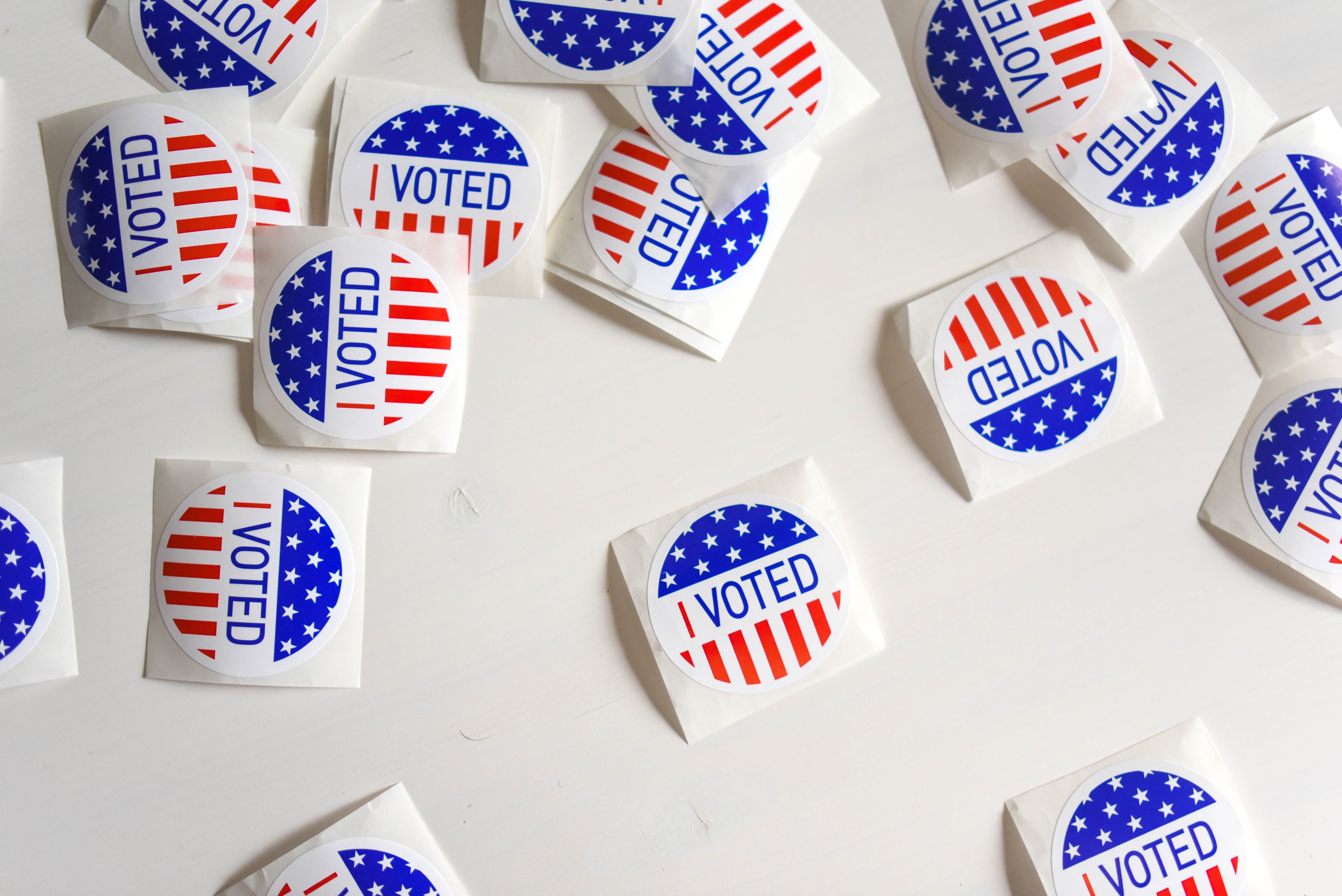
I think I’ll dress up as a mail-in ballot since that seems to be the most terrifying thing in the country today. (Sidenote: Vote on Nov. 3. Vote by mail, vote in person, drop your vote off in a ballot box. I don’t care how you vote. Crawl through a lake of spiders, a graveyard of zombies – just vote!)

The CDC issued COVID-19 risk categories, pertaining to Halloween activities. The lowest risk is a virtual festival where celebrations are held on Zoom because we just can’t get enough of Zoom, can we? (Sidenote: Has anyone investigated the connection between the coronavirus and Zoom? Hmm??)

Moderate risk includes small gatherings where individuals stay apart from each other and wear those Halloween masks from the ‘70s because there is no way germs (or breath) will get through that thick plastic.

Higher risk activities will be your social distanced haunted houses where vampires and witches stand six feet away and snarl the horrible things they’d do if they could just get a little closer. That horrifying thing breathing down your back is the local Karen, screeching into her cellphone and looking for a manager.

Posing the highest risk are large, in-person, no-mask gatherings made popular in places like Utah and Washington Counties. (Sidenote: Idiots.)

People have tried to ruin Halloween for centuries. The latest attempt was the introduction of Trunk-or-Treat, which should be banned in all 50 states for its mediocre contribution to the holiday, so I don’t think COVID will stop Halloween enthusiasts. Some people find Halloween offensive, with its glittery bats and baby werewolves. But everything is offensive this year. If something didn’t offend someone in 2020, did it really happen?

I guess we’ll see if people party safely this Halloween when COVID results start rolling in two weeks later. I’ll stand outside your hospital room with signs like, “I wish youd listened” and “Your an imbecile”.

Originally published in the Davis Clipper

Social Distancing Activities for Fall

Design a site like this with WordPress.com
Get started